











Ready
Ready is what makes Dogwatch different. Before any dog goes to a new home, we make sure they’re ready for it. That means four things:
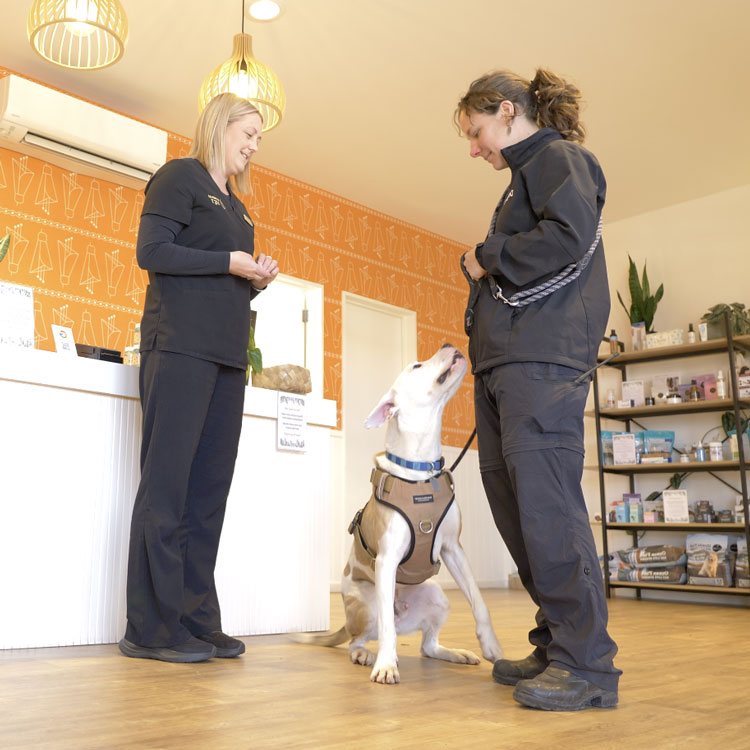
What Lifeskills Training Involves
Every day, every dog
Each dog spends around three hours a day with a person and has their own space. Our sanctuary covers over seven acres, including wetlands. They also head out on community walks, getting used to the sights, sounds and people they’ll meet in their new life.
Daily enrichment
Shelter life can be hard for a dog, so we give them something interesting to do every day. Treats hidden in a cardboard tube, a box to explore, something to sniff, chew or forage. These simple activities help dogs use their natural instincts and give them a sense of achievement.
Our Dog Training team runs workshops through the year to teach volunteers how to make enrichment that suits each dog. We turn donated toilet rolls, egg cartons and cardboard boxes into activities, and keep a whole cupboard stocked and ready to go. One volunteer gets up an hour early before every shift, just to make enrichment for the dogs.
Dog Club
Dog Club is a space at the sanctuary set up like a home, where dogs can relax, explore and learn at their own pace. Inside, there’s a sofa, a rug, a crate and a toy box, so dogs can practise everyday life, like sitting on the couch, before they go to theirs.
Outside, the courtyard and garden are full of things to discover: platforms, logs, ramps, tunnels, pools, a sandpit for digging, a herb bath and a sensory garden of dog-friendly plants.
In Dog Club, the dog leads. Using ACE Free Work, an approach developed by Animal Centred Education in the UK, dogs explore stations with different heights, textures and scents, choosing where to go for themselves. It helps them relax, build confidence and settle, ready to learn. Every session is run by a staff member or volunteer, and we record what each dog enjoys, so every visit builds on the last.
Every dog at Dogwatch is different, so we treat them that way.
Volunteers Making a difference
We couldn’t do what we do without our volunteers. They give their time to get to know our dogs, build their handling skills and help each dog practise the things they find hard.
Our volunteer groups are matched with specific dogs and work alongside our behaviour advisors and staff to follow each dog’s training plan. That might mean helping a dog pass another dog calmly, check back in with their handler when they spot something they want to chase, or stay settled around things they usually react to.
It takes patience and plenty of practice. For a dog who used to struggle every time another dog came into view, being able to walk past one calmly is a big moment.
Our volunteers help make those moments possible.
Extra care when it’s needed
Some dogs need more than routine care. Thanks to Leroy’s Legacy, a fund created by a long-time supporter, dogs needing extraordinary medical care get it. Macy, a young collie cross, needed her hind leg amputated. Today she’s happy, healthy and living her three-legged life in her own home.